Coming Home to Nature, Coming Home to Ourselves
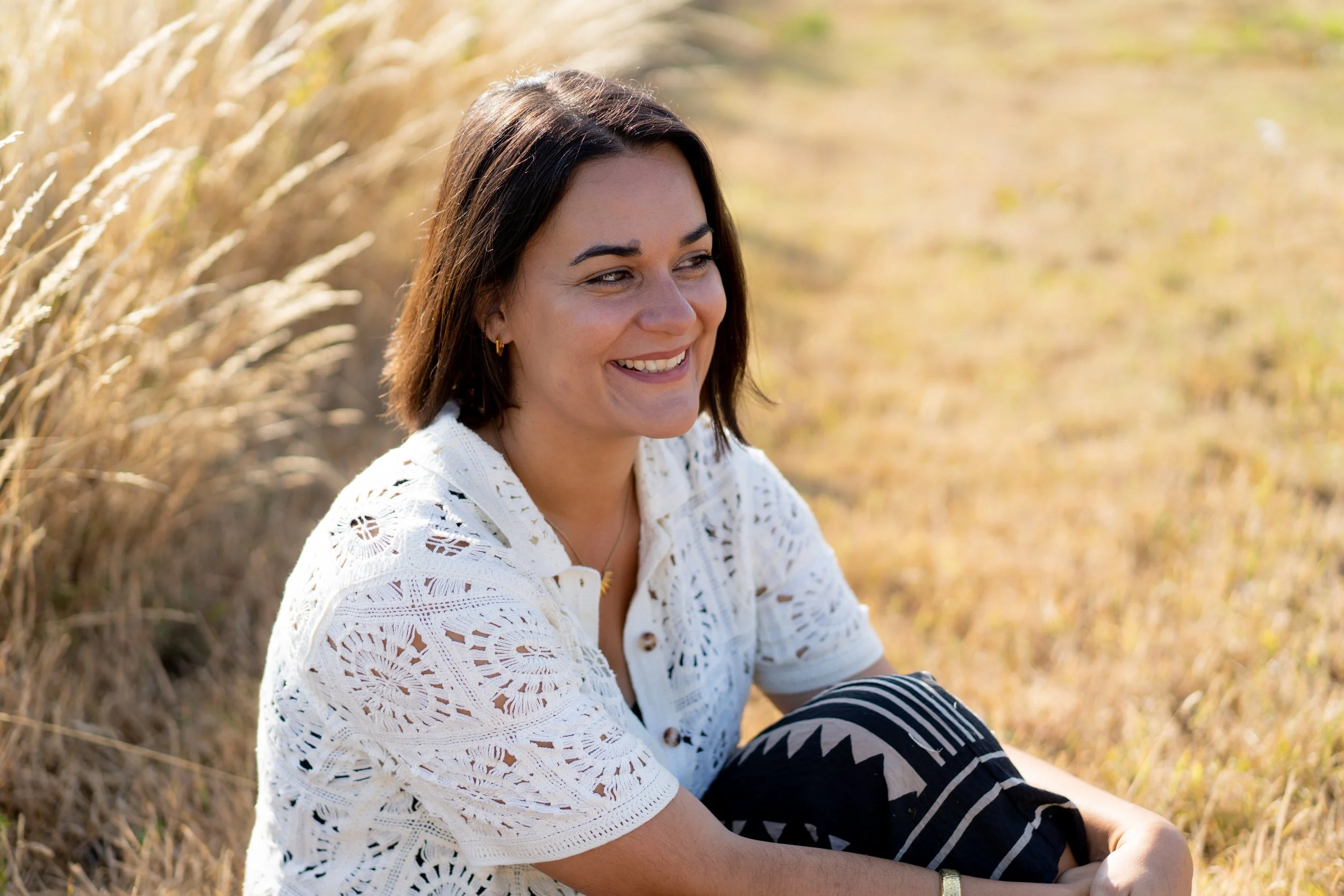
I’ve been reflecting a lot lately on our relationship with nature. Not just about getting outside for a walk, or the benefits of being in green spaces, or making sure we get enough fresh air. Something a bit deeper than that. I wonder if, somewhere along the way, we’ve forgotten that we are nature too.
We spend so much of our lives inside buildings, looking at screens, moving between appointments, responding to messages and thinking about what needs to happen next. We organise our days around clocks and calendars and deadlines. For many of us, life has become very fast.
We can spend so much time in our heads that we lose touch with the quieter, more instinctive parts of ourselves. We know what needs doing, but not necessarily how we feel. We can be very good at getting through the day while being less connected to what is actually happening inside us.
I know this feeling all too well. For a long time, I was very good at doing, achieving, adapting and keeping going. From the outside, my life looked full and successful, but underneath I was becoming increasingly disconnected from myself. It took stepping away from my career, experiencing profound grief after losing my best friend Hannah, and eventually spending ten days in silent meditation for me to start listening again.
In the silence, with nothing to achieve or perform, I began to hear my own inner voice. I realised I hadn’t really been lost. I’d simply been looking for a sense of home in the wrong places. Nature became part of that journey.
There is something about being outside that interrupts the constant noise of life. You might set out for a walk thinking about an email you need to send, a conversation you need to have or everything you need to organise that week. And then you notice something. The light through the trees. The sound of the wind. The changing colour of the leaves. The feeling of your feet on the ground.
Gradually, without really trying, something shifts. You start noticing your breath, your body, the world around you. You arrive. Not just somewhere outside, but back with yourself.
Rebecca Solnit talks about this in Wanderlust: A History of Walking — that the human mind works at about three miles per hour, making walking the ideal pace for reflection. I think this is one of the gifts of nature, it brings us into the present without asking us to try very hard.
Perhaps this matters particularly when we are used to being the person who holds everything together. When you are the one who remembers the appointments, makes the decisions, keeps things moving, looks after everyone else and generally knows what needs to happen next, stopping can feel strangely difficult. Even when you know you need it. Sometimes you don’t realise how much you’re carrying until you have a moment when nobody needs anything from you.
Nature doesn’t need anything from us. A tree doesn’t need us to be productive. The sky doesn’t care whether we’ve reached our deadline. The seasons don’t ask us to keep performing. They simply change. There is something very reassuring about that. A tree doesn’t produce leaves all year round, there are times of growth and times of letting go, times of abundance and times of dormancy. Nothing in nature is trying to hold on to summer forever — perhaps we aren’t meant to either.
There are seasons in our lives when we have lots of energy and want to create, explore and move forwards. There are other times when we need to slow down, turn inward, rest, grieve or simply be. And yet we can be surprisingly hard on ourselves when we find ourselves in one of those quieter seasons. We wonder why we’re tired, why we don’t seem to want the things we used to want, or why we’re not moving forward quickly enough. We can even turn rest into something we need to get better at. Perhaps sometimes there is nothing wrong — we are simply in a different season.
I love Psychosynthesis, which has influenced so much of the way I work, for exactly this reason. It reminds us that we are more than the different thoughts, feelings, roles and parts of ourselves that we experience. We can become very identified with being the capable one, the successful one, the good mother, the dependable friend, the person who keeps everything together. Those parts of us are real, but they are not the whole of us. Sometimes we need a little space from them to remember there is something deeper underneath.
This is at the heart of what I call Whole Woman Wellbeing. For me, wellbeing isn’t about fixing one part of ourselves or becoming a better version of who we are. It’s about developing a deeper relationship with the whole of ourselves — our bodies, emotions, minds, relationships, values, intuition and the things that bring us a sense of meaning and aliveness.
Nature can offer us some of that space. Standing beneath a tree, looking out across a landscape or walking beside the sea can gently widen our perspective. Our problems haven’t disappeared, but for a moment they are not the whole story. We remember there is a world outside our thoughts. We remember our bodies. We remember that we are part of something living.
This is also why nature feels connected to my own experience of belonging. My journey home started early: at six years old, I left the country I was born in as war began to unfold across Yugoslavia. I left one home behind without knowing where the next one would be. Growing up between cultures, I became very good at adapting — I learned how to please, fit in and shapeshift. For a long time, I tried to create a sense of belonging through achievement.
Eventually, I began to understand that home wasn’t somewhere I needed to find outside myself. It was an inside job: I needed to develop a relationship with myself. Being in nature has given me another experience of that. When I’m outside, I don’t have to perform my way into belonging. I don’t have to be productive enough or successful enough. I am simply there, another living thing amongst other living things. For me, there is always something deeply comforting about that.
Perhaps this is another reason nature feels so important to my work. Whole Woman Wellbeing is not about separating our physical wellbeing from our emotional or inner lives. We are whole, interconnected human beings, living in relationship with other people and with the natural world around us. When we slow down enough to notice what is happening within us, we can often begin to notice what we need in a much more honest way.
The poet Mary Oliver wrote so beautifully about this kind of attention — about noticing the natural world and, through noticing it, becoming more awake to our own lives. Her work often brings me back to a simple question: what does it mean to really pay attention to the life we are living? I think that question sits quietly underneath much of my own work too.
Maybe we could become a little more curious about the season we are in ourselves. What do I need right now? What am I ready to let go of? What wants more space? We don’t always need an immediate answer. In fact, I think one of the problems with our busy lives is that we are so used to looking for answers that we don’t give ourselves enough time to simply notice the questions. Sometimes the space itself is what we need.
This is also why I’ve been thinking about something called the Fresh Start Effect, a psychological phenomenon I found out more about recently through psychotherapist Julia Samuel MBE. The idea is that certain moments in time can feel like natural points for a new beginning: the start of a year, a birthday, a new month, or the beginning of a season. And for many of us, September carries a particularly strong sense of this.
I’ve always felt it myself. September has often felt more like a new beginning to me than January. There’s something about the change in the air, the return to routine and that familiar feeling of a new term beginning that creates a sense of possibility. It feels as though we’ve reached a natural pause in the year. A moment when we can look back at what has been and look ahead at what might come next.
Julia Samuel talks about these moments as opportunities to mark an intention. They give us a chance to pause, lift our heads and think about how we want to live. I love this idea because it makes a fresh start something more meaningful than simply deciding to be more organised, productive or disciplined.
The problem is that September can also be exactly when life speeds up again. The diaries fill. Work gets busier. Children go back to school. Routines return. Responsibilities gather momentum. After the relative spaciousness of summer, suddenly there are emails to answer, things to organise and places to be. So the very moment that offers us this natural sense of possibility can also be the moment we miss it.
I hear versions of this all the time. I’ve spent the summer looking after everyone else and now I’m straight back into it.I feel like I should be getting organised, but actually I’m exhausted.I keep saying I need some time to myself, but somehow it never happens. Nothing is wrong exactly. I just don’t feel quite like myself.
And perhaps the most familiar one of all: I want a fresh start, but I don’t want another self-improvement project. I understand that one completely. Maybe a fresh start doesn’t have to mean becoming a new person, maybe it can simply mean creating enough space to hear yourself again.
That feels very connected to the wisdom of nature. September doesn’t ask the trees to reinvent themselves. The season changes, and they respond. Leaves fall. Energy moves inward. What is no longer needed is released. What matters is protected. The tree doesn’t have to force the next stage, it simply enters it.
Maybe we can give ourselves permission to do something similar. We don’t have to reinvent ourselves every time a new season begins. We don’t need another list of goals, another plan for self-improvement, or another version of ourselves to work towards. Sometimes a seasonal reset can be much quieter than that: a chance to stop for a moment, notice where we are, acknowledge what the year has held, let go of what we don’t want to carry forwards, reconnect with what nourishes us and listen for what matters now.
For me, this is where nature, reflective practice and practical wellbeing merge. A pause gives us the chance to notice what is really going on, rather than simply carrying on on auto-pilot. Simple embodied practices can help us come back into ourselves when we’ve been living mostly in our heads. Reflection gives us space to hear our own thoughts and feelings. And seasonal ritual can give those inner shifts a little more meaning — marking a transition, acknowledging what we’re ready to release and making space for what we want to carry into the next season.
This is the kind of wellbeing I’m interested in: not another set of rules or routines to add to an already full life, but practical ways of coming back into relationship with ourselves. Ways of listening to the body, making space for emotions, noticing what gives us energy, recognising what depletes us, and remembering what actually matters.
None of this needs to be complicated. It might be five quiet minutes outside, a walk without your phone, noticing how your body feels before making a decision, taking a few breaths when you realise you’re rushing, or sitting down at the end of a season and asking yourself some honest questions. These small practices can become ways of returning to ourselves in the middle of ordinary life.
This approach is at the heart of The September Reset, the live online wellbeing session I’m holding for women on Friday 18th September. I wanted to create something that brings these things together in a way that feels warm, grounded and genuinely nourishing — practical wellbeing tools alongside reflective practice, nature-inspired coaching and a simple seasonal ritual.
It’s a small expression of Whole Woman Wellbeing in practice: a chance to pause, come back into yourself, listen to what’s happening beneath the busyness and make space for what matters now. And there’s another part that matters to me too: doing this with other women.
There is something powerful about being in a room — even an online one — with women who are also taking a little time to pause and listen to themselves. You don’t need to know anyone beforehand, and you don’t need to arrive with a particular problem or goal. Just a willingness to step out of the usual rhythm for a while, reflect on where you are and share the space with a welcoming group of like-minded women.
Maybe life is going well and you simply haven’t had much space to hear yourself lately. Perhaps you’re feeling a little stretched, disconnected or ready for a change. Or perhaps, like me, you just love that feeling September brings — the change in the air, the sense of a new season beginning and the possibility of starting again. Whatever brings you, you are welcome.
The September Reset is 90 minutes to pause, take stock and reconnect with yourself before autumn gathers momentum. A little space for practical wellbeing, meaningful reflection, seasonal ritual and connection. Because Whole Woman Wellbeing, to me, is ultimately about this: feeling more at home within yourself, so you have more freedom to meet your life as the woman you actually are.
Maybe coming home to ourselves isn’t always about looking further in. Sometimes, we find our way back by looking around us — and sometimes by pausing alongside other women who are doing the same.
The September Reset with Jana Nightingale, international wellbeing practitioner, facilitator, coach & seasonal ritual creator (15+ yrs experience, BACP / PDF)
Friday 18 September | 9–10.30am | Online
£39 early bird / £49 thereafter.
More info & tickets here.